
How to Make your Brand Stand Out
Being a newbie in any industry is tough, most especially in the cutthroat world of food and bever-ag...

CITEM advises all exhibitors, buyers, suppliers, service providers, partners, stakeholders, and the public to remain vigilant against unauthorized individuals, groups, or third-party entities falsely claiming to represent CITEM and its official programs and events.
These unauthorized communications may be sent through email, calls, SMS/text messages, social media, messaging applications, websites, or other digital channels. They may involve the alleged selling, distribution, or unauthorized access to CITEM data, databases, or contact lists. They may also involve solicitations, donation requests, sponsorship offers, payment instructions, or other monetary requests using the name of CITEM, its officials, personnel, events, or partners.
Please be reminded:
Official CITEM communications are sent only through verified official channels and corporate email domains, including @citem.com.ph.
CITEM does not authorize any individual, third-party entity, or unofficial representative to sell, distribute, share, or provide access to its official data, databases, contact lists, or stakeholder information.
CITEM does not authorize donations, sponsorship payments, direct fund transfers, e-wallet payments, or other monetary transactions through personal accounts or unofficial channels.
Do not click links, download attachments, reply, provide information, or make payments in response to suspicious communications.
If you receive any suspicious communication claiming to be connected with CITEM, please verify directly with your official project focal point or through CITEM’s official communication channels.
Thank you for your continued cooperation and vigilance.
Center for International Trade Expositions and Missions
June 22, 2026
With large-scale production, year-round supply, and a growing range of value-added applications, Philippine pineapple continues to prove why it belongs in global trade.
There is a distinct sweetness to a Philippine-grown pinya (pineapple) that locals instantly recognize, whether it is the crisp Queen variety eaten fresh at roadside stalls or the globally traded MD-2 found in major supermarkets. Across the country, pineapples hold a familiar place in everyday Filipino life, from fruit stands along provincial highways to household dishes, holiday spreads, beverages, preserves, and processed snacks.
That familiarity, however, is only one part of the story. The country’s pineapple industry has become export-worthy because it combines favorable growing conditions, large-scale production, established processing capacity, and an expanding range of value-added applications.
Part of what makes these pineapples competitive in the global market begins with the land itself. Mindanao, dubbed as the “fruit basket of the Philippines,” produces the majority of the country’s pineapples. According to the Philippine Statistics Authority (PSA), Northern Mindanao produced 1.77 million metric tons of pineapple in 2024, making pineapple the region’s second-largest major fruit crop after banana and accounting for 46.6% of the region’s major fruit crop production. Bukidnon alone accounted for 81.3% of Northern Mindanao’s major fruit crop output, highlighting the province’s role as a major production base.
The Philippines also holds a strong position in global pineapple exports. World Bank trade data show that in 2023, the Philippines was the world’s second-largest exporter of fresh or dried pineapples, shipping 333.51 million kilograms valued at US$354.62 million, behind Costa Rica. The Philippines retained its position as the world's second-largest pineapple exporter for the third consecutive year in 2025, with shipments expanding by around 14 percent to approximately 775,028 metric tons — its highest export volume on record — according to preliminary estimates by the Food and Agriculture Organization (FAO). China remained the top destination, with shipments rising 19 percent year-on-year, while Japan and South Korea absorbed around 36 percent and 13 percent of total volume respectively — both markets recording continued double-digit growth.
Part of what makes Philippine pineapples competitive begins with the land itself. Mindanao’s volcanic soils, steady rainfall, and long hours of sunlight support year-round cultivation, allowing producers to grow pineapples with consistent sweetness, acidity, and texture.
This consistency is important because international buyers are not only sourcing flavor; they are sourcing reliability. Fresh pineapples must hold quality through harvest, packing, shipping, and retail display, while processed pineapple products must deliver predictable flavor and texture across batches.
The country’s established pineapple industry supports both requirements. Large growers and processors have helped build the infrastructure needed for fruit grading, packing, cold-chain handling, canning, drying, juicing, and ingredient processing. This allows Philippine pineapples to move across multiple market channels, from fresh produce aisles to food service, beverage manufacturing, bakery applications, and shelf-stable retail products.
The export strength of Philippine pineapple is not limited to fresh fruit. The fruit’s natural balance of sweetness and acidity makes it suitable for beverages, dried snacks, jams, preserves, sauces, and industrial blends.
This versatility is visible among products showcased at IFEX Philippines, where exhibitors transform pineapple into formats designed for longer shelf life and wider distribution. Zigmund Enterprises, for instance, combines pineapple with calamansi to create all-natural juice concentrates, highlighting the fruit’s ability to work in tropical beverage applications. Fenor Foods International Corp. produces dried pineapple slices that retain the fruit’s sweetness and tang in a shelf-stable snack format. Mama Nene’s Homemade Delights offers pineapple jams that translate the fruit into a spreadable product suitable for everyday retail and gifting markets.
These examples show how Philippine producers extend the value of pinya beyond the fresh fruit trade. For buyers, this means access not only to raw agricultural output, but to finished and semi-processed products that can serve retail, food service, and manufacturing needs.
Pineapple also contributes to non-food industries through piña fiber, derived from the leaves of the Red Spanish variety and used in traditional textiles such as the Barong Tagalog. While the fruit remains the industry’s commercial center, this by-product reflects how the plant can support broader value creation across agriculture, craft, and design. It also reinforces a key strength of Philippine pineapple production: the ability to generate multiple applications from a single crop.
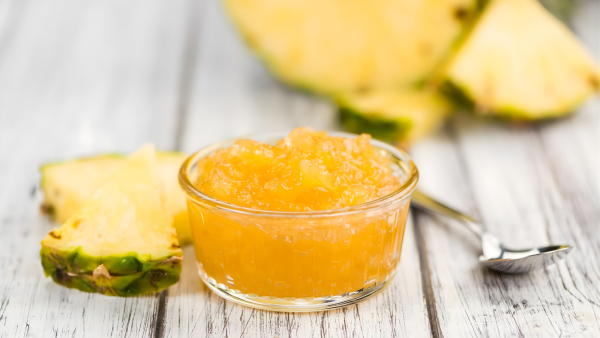
From fresh fruit to spreadable goodness, pineapple jam captures the rich flavor of Philippine-grown pineapples in every spoonful. Photo credit: HandmadePictures
Government and trade support help sustain the sector’s momentum. The Department of Agriculture (DA) supports crop development through research, production technologies, and farmer assistance, while the Center for International Trade Expositions and Missions (CITEM), the export promotion arm of the Department of Trade and Industry (DTI), helps connect Philippine food producers with international buyers through platforms such as IFEX Philippines.
This matters because export readiness is not built on production alone. For pineapple products to compete internationally, producers must meet expectations around packaging, shelf life, product consistency, labeling, and buyer communication. Trade platforms provide a space where fresh produce suppliers, processors, and micro, small, and medium enterprises can present these capabilities directly to buyers looking for reliable sourcing partners.
Philippine pineapples remain globally competitive because the industry offers more than a sweet tropical fruit. It offers scale, year-round supply, processing infrastructure, product versatility, and a growing base of enterprises capable of turning pinya into market-ready food and non-food applications.
For buyers seeking tropical fruit products with established supply and flexible uses, the Philippines continues to make a strong case for why its pineapples belong in global trade.
Explore Philippine pineapple products and connect with food producers through IFEX Philippines and IFEXConnect.
***
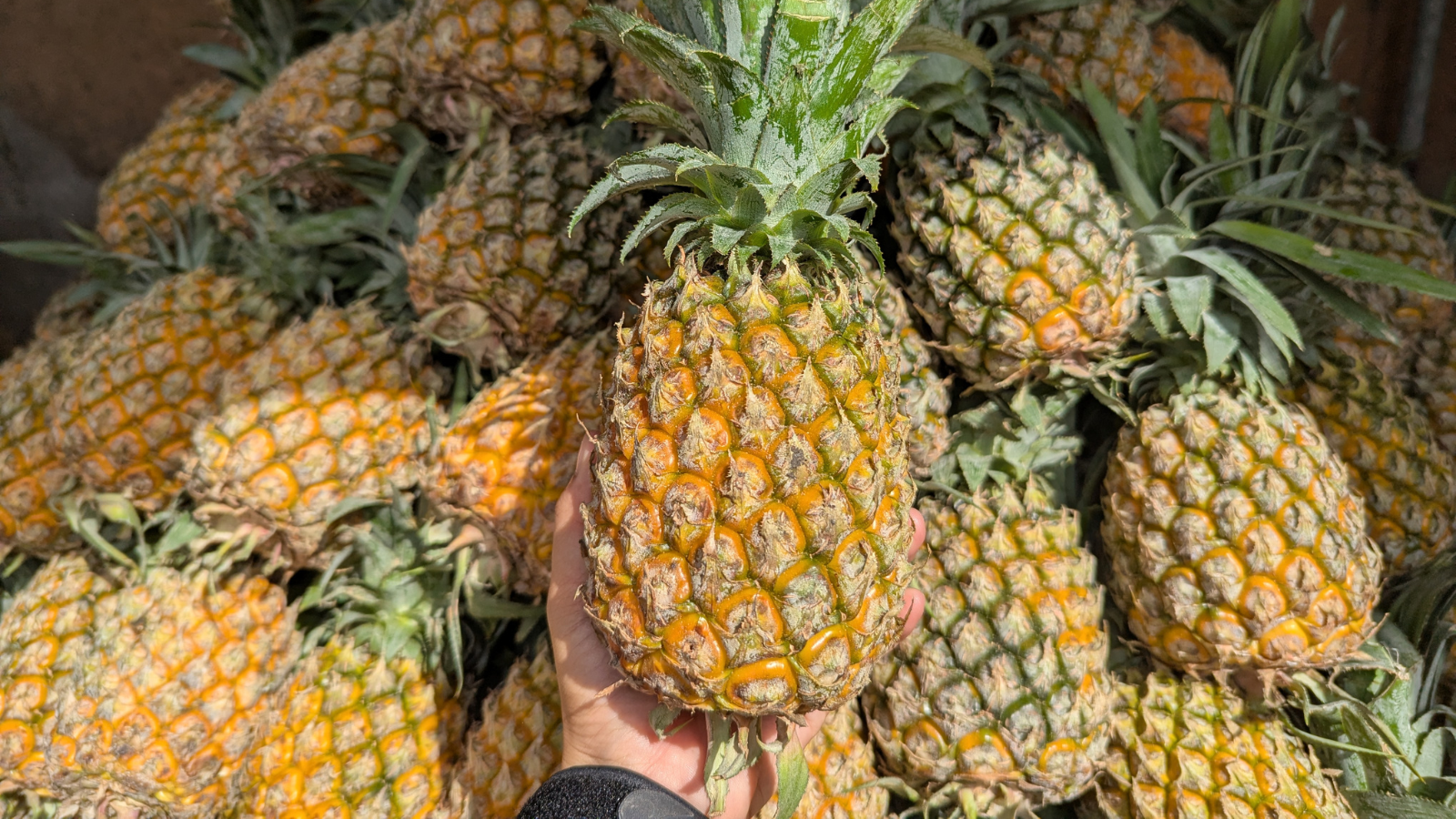
Banner caption: Naturally sweet, the Queen pineapple variety from Calauan, Laguna is known for its bright golden skin, compact size, and crisp, juicy flesh. Shot by Tripples
Being a newbie in any industry is tough, most especially in the cutthroat world of food and bever-ag...
In April 2020, mountains of surplus broccoli and cauliflower were pictured decaying in the Mountain...

A country renowned for its pristine beaches and infectious hospitality, the Philippines is also the...

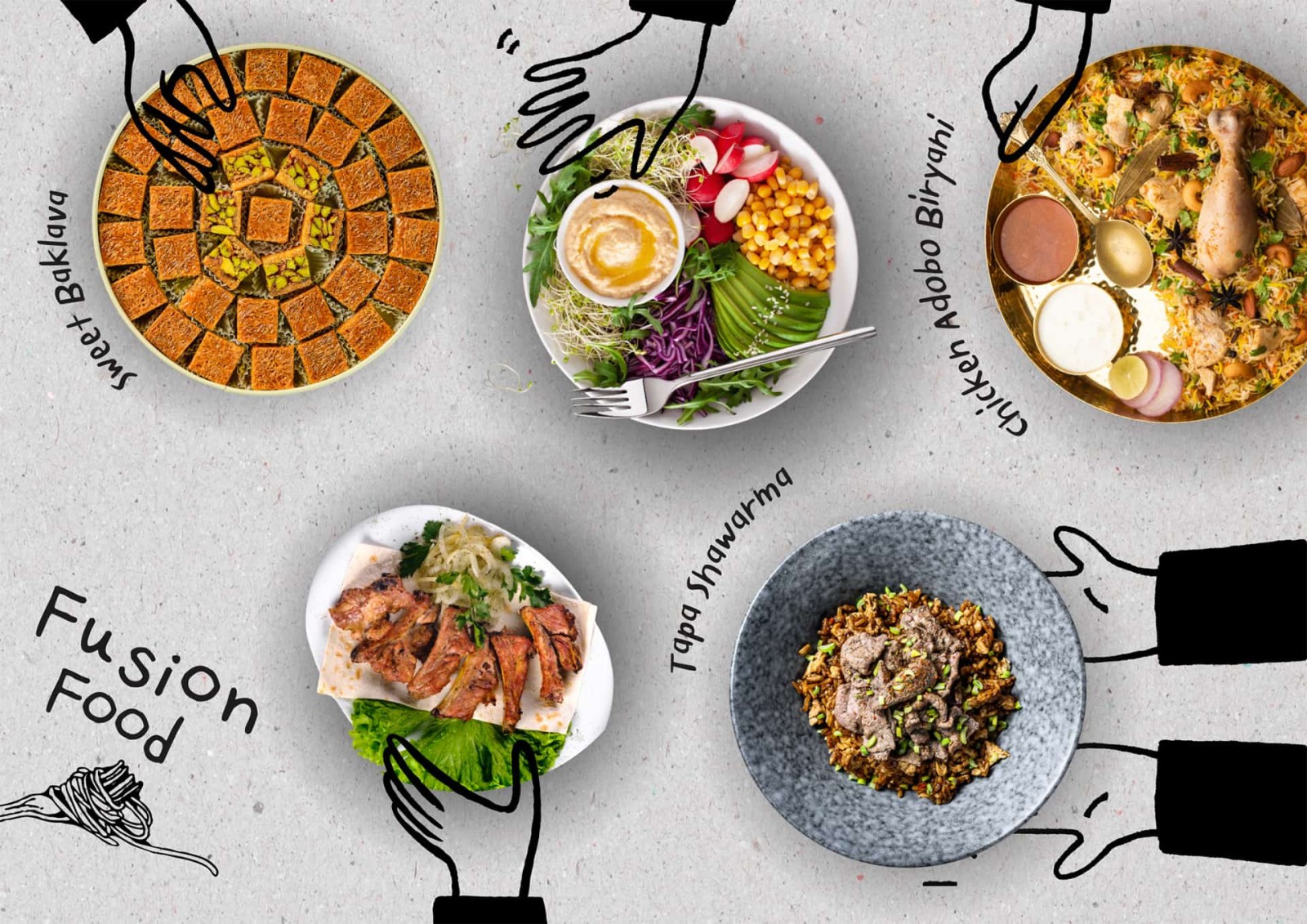
Check out these food fusions between Filipino and Middle Eastern cuisines
The unending quest for healthy and sustainable food amid changing lifestyles
A quick look at the Philippine food staple often getting a bad health rap