
How to Make your Brand Stand Out
Being a newbie in any industry is tough, most especially in the cutthroat world of food and bever-ag...

CITEM advises all exhibitors, buyers, suppliers, service providers, partners, stakeholders, and the public to remain vigilant against unauthorized individuals, groups, or third-party entities falsely claiming to represent CITEM and its official programs and events.
These unauthorized communications may be sent through email, calls, SMS/text messages, social media, messaging applications, websites, or other digital channels. They may involve the alleged selling, distribution, or unauthorized access to CITEM data, databases, or contact lists. They may also involve solicitations, donation requests, sponsorship offers, payment instructions, or other monetary requests using the name of CITEM, its officials, personnel, events, or partners.
Please be reminded:
Official CITEM communications are sent only through verified official channels and corporate email domains, including @citem.com.ph.
CITEM does not authorize any individual, third-party entity, or unofficial representative to sell, distribute, share, or provide access to its official data, databases, contact lists, or stakeholder information.
CITEM does not authorize donations, sponsorship payments, direct fund transfers, e-wallet payments, or other monetary transactions through personal accounts or unofficial channels.
Do not click links, download attachments, reply, provide information, or make payments in response to suspicious communications.
If you receive any suspicious communication claiming to be connected with CITEM, please verify directly with your official project focal point or through CITEM’s official communication channels.
Thank you for your continued cooperation and vigilance.
Center for International Trade Expositions and Missions
July 08, 2026
See how a homegrown brand scales Filipino staples for modern trade while honoring its roots.
Many food businesses start with a simple recipe, a family tradition, or a passion for cooking. Some begin small, testing recipes at home, while others source local ingredients to see what the consumers will like. Cheche’s Gourmet began with an unexpected market response.
What started as a small batch of gourmet tuyo (salted dried fish) sold at a school fundraising bazaar in 2016 slowly uncovered something bigger. A demand that grew not because they followed a trend, but because they delivered a treasured Filipino flavor, ready for modern markets. “Cheche’s Gourmet is actually an accidental business,” founder June Jay E. Sanlao shares in the interview, “this really isn’t the kind of business I want to be in.”
Cheche’s Gourmet takes its name from a personal place. The brand was named after Sanlao’s daughter, Chelsea, nicknamed Cheche, during a school fundraising bazaar where the first products were sold. What followed was organic growth. Orders increased after the products were introduced online, eventually prompting her to leave her full-time job and focus on the business full-time.
By 2018, Cheche’s Gourmet was formally registered, marking its transition from a home-based experiment to a growing food enterprise rooted in discipline and long-term vision.
At the heart of Cheche’s Gourmet is a guiding principle: innovation should never erase identity. This became clear early on through direct feedback from industry professionals. No matter how much they developed or refined their products, they maintain the authentic flavor of “tuyo”.
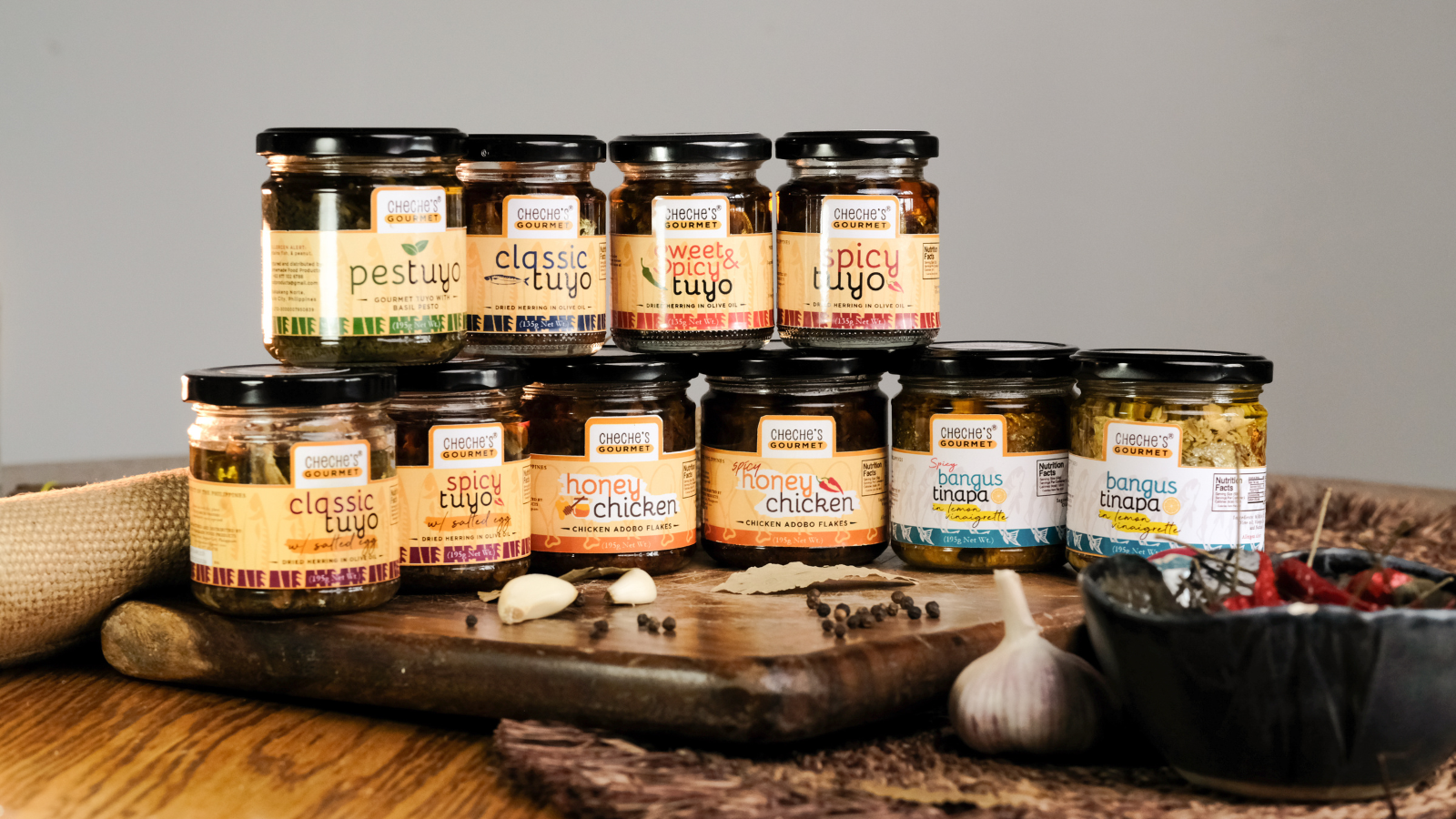
This mindset shapes Cheche’s Gourmet's entire product line, from gourmet tuyo and pestuyo (a pesto-style preparation infused with tuyo) to chicken adobo flakes based on a family recipe. Each product is refined for consistency and shelf stability, without losing its cultural reference point. The goal is not to reinvent Filipino food, but to present it in a way that fits contemporary kitchens, retail shelves, and export requirements.
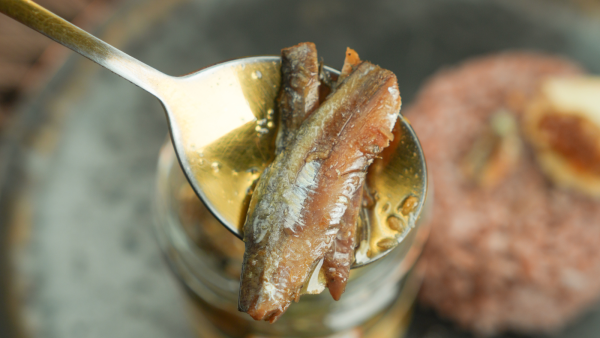
Cheche’s Gourmet preserves the essence of tuyo while enhancing its quality, texture, and taste. Original photo from Cheche's Gourmet.
While gourmet tuyo gained attention online, Cheche’s Gourmet avoided expanding too quickly or chasing short-lived trends. Instead, the focus stayed on strengthening core products and meeting regulatory standards. “ We don't hop on trends right away. Gourmet Tuyo was a trend at that time. And for the longest time, the products we’ve been developing since 2016 were carefully built. I didn’t rush the process. We didn’t rush to create new products just because something was trending,” she explains. “We focused on our flagship products. We make sure we follow the Food and Drug Administration (FDA) standards in our local market, and we study them. We study our products. Is there real demand for this, or is it just hype?”
This approach allowed the brand to invest time in Food and Drug Administration (FDA) compliance, product study and development, and market fit, factors that matter to buyers, distributors, and micro, small, and medium enterprises (MSMEs) looking for reliable, scalable food products. Instead of rapidly expanding its product line, the brand focuses on refining a core selection of flavors that resonate with its market.
Right now, their product range includes classic gourmet tuyo alongside popular spicy variants, as well as pestuyo (a pesto-style preparation infused with tuyo) that has become one of its more distinctive offerings. The chicken adobo flakes, developed from a family recipe, further reflect this approach, translating familiar Filipino dishes into shelf-stable formats that fit specific market needs while retaining their original taste profiles
Ingredient selection and quality control are central to operations. Quality control begins at sourcing. “We are very particular about choosing our ingredients. We make sure that we check our raw materials. We follow a checklist, a Good Manufacturing Practices (GMP) manual, and a manufacturer's manual for our ingredients to ensure they meet our standards. ” June Jay notes. “So if there are bad fresh ingredients, then definitely we discard them.”
All Cheche’s Gourmet products are all-natural. They don’t use additives or artificial flavoring just to “make it taste better.” When it comes to the oils they use, they choose the one that best suits the dish, either chicken or adobo flakes. While olive oil is popular and known for its quality, they haven’t used it in their products because it would make the cost much higher. Instead, they focus on oils that preserve the flavor without compromising affordability, especially for chicken and fish.
Cheche’s Gourmet invested in compliance by securing Food and Drug Administration (FDA) certifications and preparing for international requirements like Halal certification. Start-ups usually see these steps as costly. But for Cheche’s Gourmet, they are important investments. They signal trade readiness for larger markets and long-term partnerships.
Packaging is important for how Cheche’s Gourmet presents its products. The brand uses bottles that are durable and reusable. This decision supports eco-friendly practices and protects the product.
Aside from protection, packaging also serves as a marketing tool. Each design, meant for global shelves, balances visual appeal with clear cultural identity. Filipino elements are carefully included in Cheche’s Gourmet packaging concept, showcasing the brand’s focus on Treasured Filipino Flavor. This is especially evident in the themed gift boxes. They have a jeepney-inspired design and an upcoming release inspired by the Bahay Kubo (nipa hut).
In 2022, they participated in IFEX Philippines, which marked a turning point for Cheche’s Gourmet. Exposure to international buyers and trade standards expanded the brand’s perspective beyond local distribution. Recognition for its chicken adobo flakes reinforced the idea that Filipino flavors, when produced with care and consistency, can compete on a global stage. Through IFEX, Cheche’s Gourmet has secured a market in Taiwan, opening doors for further international growth.
Today, the brand operates on a business-to-business (B2B) model, working with distributors, resellers, and rebranding partners. They treat certifications, including Food and Drug Administration(FDA) License to Operate (LTO) and Certificate of Product Registration (CPR), as essential investments rather than optional costs, with Halal certification currently in progress.
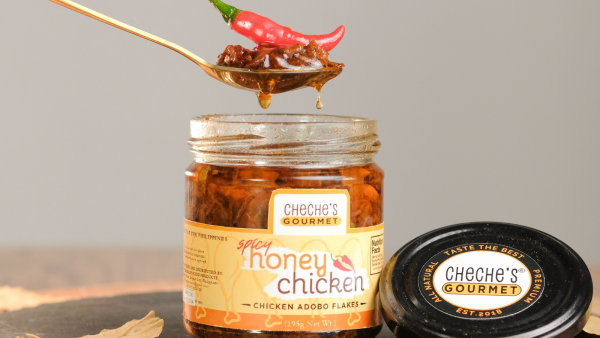
Cheche’s Gourmet Spicy Honey Chicken, crafted to balance heat, sweetness, and texture. Original photo from Cheche's Gourmet.
When asked about the long-term impact of Cheche’s Gourmet, Ms. June Jay E. Sanlao, the owner and general manager, emphasizes both industry and community. She hopes to show that even small players can compete by offering products that shine both locally and internationally. The brand started with just ₱500 in capital, and its growth shows that dedication and vision can take a small business far.
For the community, Cheche’s Gourmet aims to create more employment opportunities, particularly for women and out-of-school youth. Many of the brand’s current staff are mothers or young people who didn’t finish school, and she hopes they can continue supporting and empowering more people in the community.
Brand growth is measured not only in sales but also in the ability to bring more people into the process.
As Cheche’s Gourmet expands its retail presence and production facilities, its focus remains clear: creating products that honor Filipino flavors, meet trade standards, and promote inclusive growth. This year, Cheche’s Gourmet plans to expand its product line to specialty stores like Kultura and SNR, reaching larger markets while increasing production to meet rising demand.
In an industry often focused on new trends, Cheche’s Gourmet shows that consistency, respect for tradition, and careful execution hold just as much power, especially when bringing local food to global audiences.
Cheche’s Gourmet once again participated at IFEX Philippines 2026, where it showcased all-natural Filipino favorites from gourmet tuyo and pestuyo to chicken adobo flakes, demonstrating how traditional flavors can thrive in modern kitchens and international food, beverage, and ingredients.
Learn more about Cheche’s Gourmet and other Filipino exporters at IFEXConnect.com.
***
Banner caption: Cheche’s Gourmet: Where Quality, Creativity, and Flavor Come Together. Original photo from Cheche's Gourmet
Being a newbie in any industry is tough, most especially in the cutthroat world of food and bever-ag...

In April 2020, mountains of surplus broccoli and cauliflower were pictured decaying in the Mountain...

A country renowned for its pristine beaches and infectious hospitality, the Philippines is also the...

Check out these food fusions between Filipino and Middle Eastern cuisines
The unending quest for healthy and sustainable food amid changing lifestyles
A quick look at the Philippine food staple often getting a bad health rap