
How to Make your Brand Stand Out
Being a newbie in any industry is tough, most especially in the cutthroat world of food and bever-ag...

CITEM advises all exhibitors, buyers, suppliers, service providers, partners, stakeholders, and the public to remain vigilant against unauthorized individuals, groups, or third-party entities falsely claiming to represent CITEM and its official programs and events.
These unauthorized communications may be sent through email, calls, SMS/text messages, social media, messaging applications, websites, or other digital channels. They may involve the alleged selling, distribution, or unauthorized access to CITEM data, databases, or contact lists. They may also involve solicitations, donation requests, sponsorship offers, payment instructions, or other monetary requests using the name of CITEM, its officials, personnel, events, or partners.
Please be reminded:
Official CITEM communications are sent only through verified official channels and corporate email domains, including @citem.com.ph.
CITEM does not authorize any individual, third-party entity, or unofficial representative to sell, distribute, share, or provide access to its official data, databases, contact lists, or stakeholder information.
CITEM does not authorize donations, sponsorship payments, direct fund transfers, e-wallet payments, or other monetary transactions through personal accounts or unofficial channels.
Do not click links, download attachments, reply, provide information, or make payments in response to suspicious communications.
If you receive any suspicious communication claiming to be connected with CITEM, please verify directly with your official project focal point or through CITEM’s official communication channels.
Thank you for your continued cooperation and vigilance.
Center for International Trade Expositions and Missions
June 02, 2026
From vegan "green caviar" to climate-smart snacks, the Philippines is transforming its top aquaculture export into a global superfood powerhouse.
For decades, the Philippines was the "Carrageenan Capital"—a silent pillar of the global food industry whose seaweed stabilized everything from plant-based dairy to organic care. Yet, for today's conscious consumer, being an invisible ingredient is no longer enough. The demand has shifted toward products that offer a narrative of regenerative growth and authentic origin.
For the savvy distributor, the opportunity is being rewritten. The Philippines has evolved from a raw material provider into a dynamic incubator for high-margin, shelf-stable innovation. By focusing on story-led finished goods, the archipelago is no longer just feeding global supply chains—it is actively shaping the future of the retail shelf.
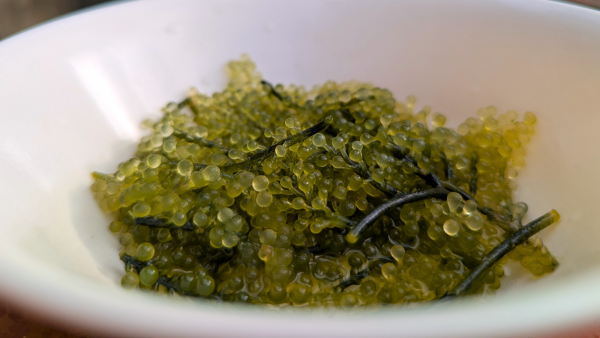
Fresh seaweed is a common sight in Philippine public markets, ready for salads, sides, and local favorites. Photograph by Tripples.
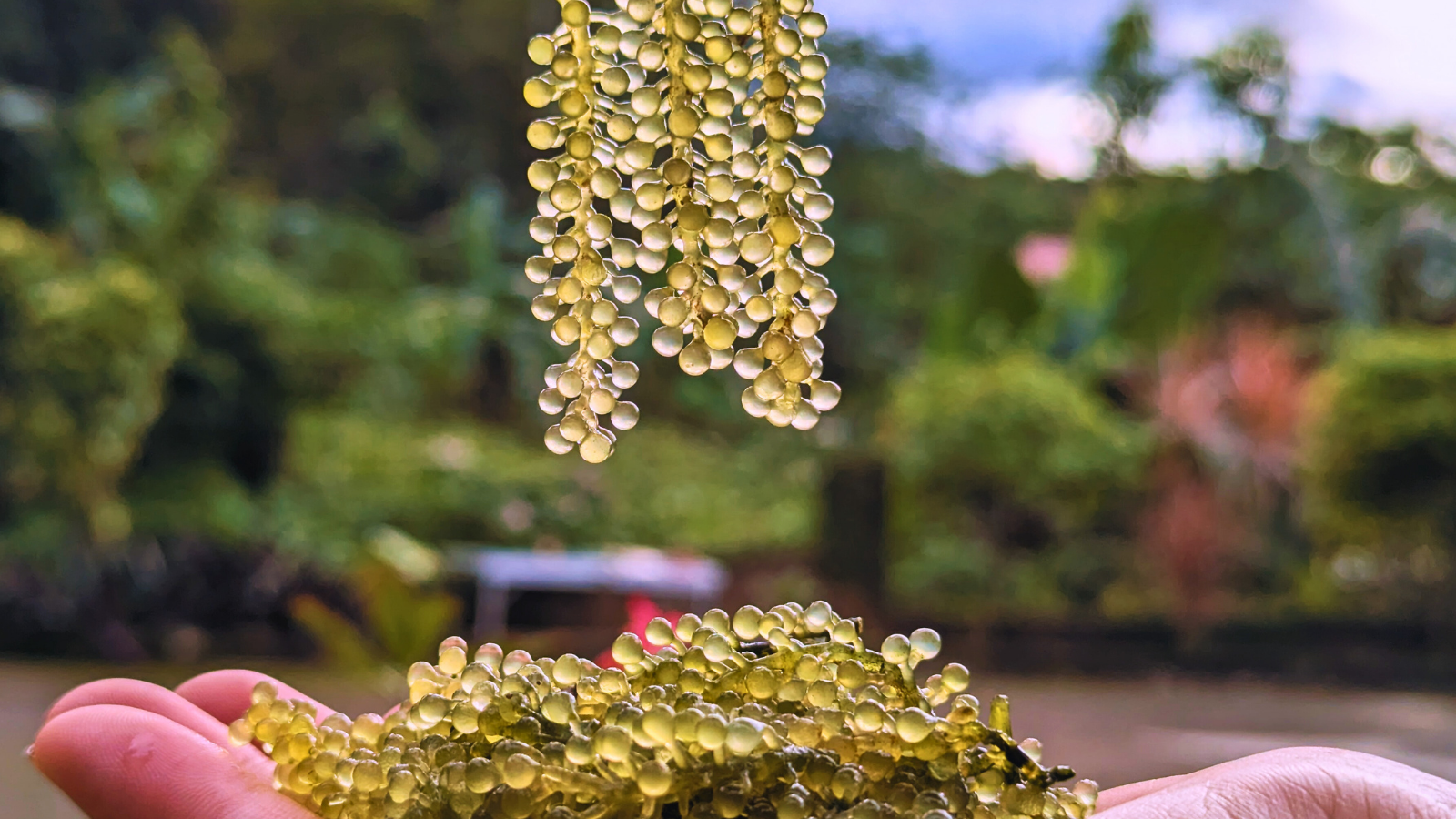
The most exciting frontier in this transition is the commercialization of lato (sea grapes). Historically, this succulent, bubble-like seaweed was a highly perishable local delicacy, restricted to coastal wet markets because of its 48-hour shelf life.
Recent advances in Philippine brining and dehydration technologies have extended its shelf life, enabling export without compromising its signature texture and oceanic flavor. This has opened access to high-value markets in East Asia, North America, and Europe, where demand for plant-based and clean-label ingredients continues to grow.
Positioned as “vegan caviar,” stabilized lato is gaining traction among chefs, specialty retailers, and health-focused consumers, with early exporters reporting increasing inquiries and repeat orders from niche gourmet segments.
Initial shipments to markets in East Asia and North America have shown strong uptake in specialty dining and premium retail, where chefs value its texture as a plant-based alternative to roe. This aligns with broader global trends, as the seaweed market continues to expand alongside demand for clean-label, plant-based ingredients. As global seaweed consumption rises, this innovation signals strong commercial potential for buyers looking to enter premium, differentiated categories.
The pivot from commodity to brand is best shown by the rise of home-grown social enterprises like Mangan by Iman. Based in the seaweed-rich waters of Tawi-Tawi—the Seaweed Capital of the Philippines—this women-led initiative is bypassing the traditional supply chain of selling sun-dried seaweed at low prices to processors. Instead, they are transforming guso (spiny seaweed) into crispy, nutrient-packed seaweed chips.
This shift has allowed the enterprise to tap into higher-value retail and export channels, where demand for sustainable, plant-based snacks is steadily increasing. Their products have gained visibility in specialty markets and curated retail spaces, reflecting strong consumer interest in origin-driven and socially responsible brands.
Early commercial performance shows growing traction, with expanding orders from niche distributors and inclusion in curated retail assortments that focus on sustainable and functional snacks. This indicates not only consumer acceptance but also the scalability of seaweed-based snack formats in premium segments.
By exporting a finished, branded product rather than raw guso, more economic value is retained within the community, while buyers receive a differentiated, market-ready item aligned with current snacking trends.
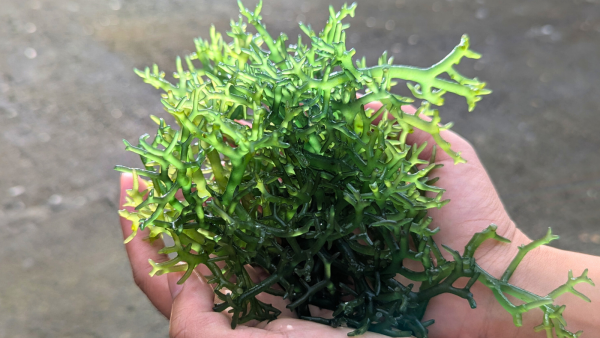
Guso (spiny seaweed) has a branched structure resembling small, leafless, fleshy, and spiny fingers. Photograph by Tripples.
One of the primary concerns for international distributors is supply chain consistency. Global demand for seaweed is projected to grow significantly, with the market expected to reach over USD 30 billion within the decade, driven by expanding applications in food, nutraceuticals, and sustainable materials. This projected growth places pressure on producing countries to increase both yield and reliability, making production efficiency a critical factor for long-term supply agreements.
Seaweed farming, however, remains vulnerable to climate change and diseases such as “ice-ice,” which can severely impact yields. To address this, the Philippine government, through the Department of Agriculture–Bureau of Fisheries and Aquatic Resources (DA-BFAR), has committed a PHP 1-billion investment into seaweed development. This includes establishing advanced laboratories for climate-resilient seedlings and improved farming techniques.
These interventions are expected to increase survival rates, reduce crop losses, and improve productivity across farming communities, enabling a more stable and scalable supply chain. For international buyers, this translates to greater consistency in volume and quality, reinforcing the Philippines’ position as a reliable sourcing partner in the global seaweed market.
Through tissue-culture propagation and improved seedstock programs, these interventions are expected to significantly improve survival rates and shorten production cycles, allowing farmers to harvest more consistently within the same farming areas. Early pilot programs indicate reduced crop losses and more uniform yields, helping stabilize output despite environmental stress.
By utilizing tissue-culture technology to produce "lab-grown" seedlings, the Philippines is ensuring that the Philippine seaweed industry remains stable despite warming oceans. This scientific backbone provides potential partners with the long-term security they need to commit to Philippine-sourced products, knowing that the country is actively "climate-proofing" its most vital aquaculture export.
The message for the global market is clear: the Philippines is moving up the value chain. We are moving beyond the extraction of carrageenan and toward the celebration of the seaweed plant itself. Whether it is through the gourmet potential of lato or the retail-ready innovation of seaweed-based snacks, the next wave of Philippine aquaculture is focused on transparency, nutrition, and sustainability.
Discover the future of regenerative aquaculture and connect with our innovators. Catch the green wave and source premium products at IFEX Philippines and through the IFEX Connect digital platform.
***
Banner caption: Seaweed grows in coastal waters, forming an essential marine habitat that supports biodiversity and helps stabilize nearshore ecosystems. Photograph by Tripples.
Being a newbie in any industry is tough, most especially in the cutthroat world of food and bever-ag...

In April 2020, mountains of surplus broccoli and cauliflower were pictured decaying in the Mountain...
A country renowned for its pristine beaches and infectious hospitality, the Philippines is also the...

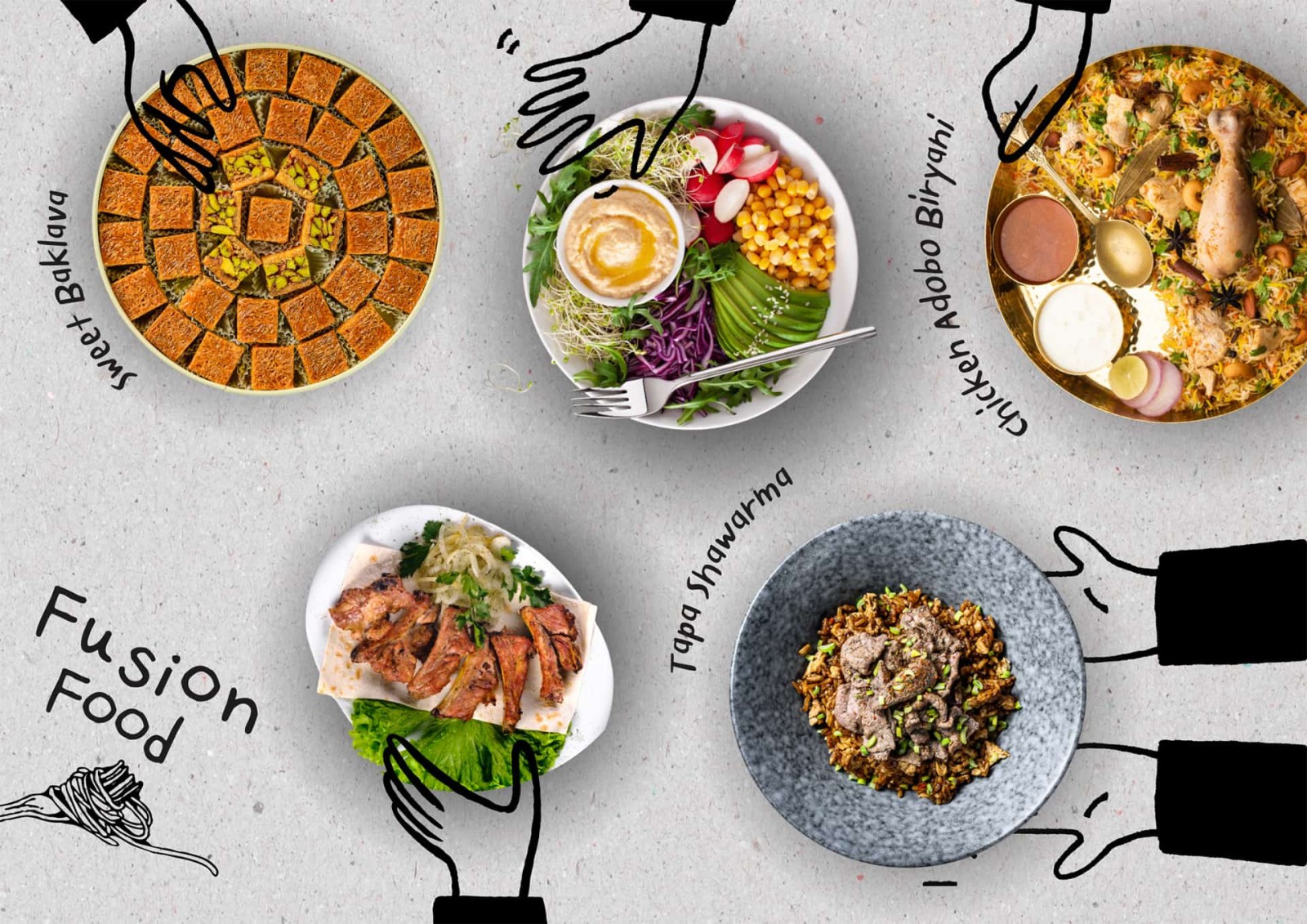
Check out these food fusions between Filipino and Middle Eastern cuisines

The unending quest for healthy and sustainable food amid changing lifestyles
A quick look at the Philippine food staple often getting a bad health rap